Supporting a Cleaner, Greener Borough: RBWM's Climate and Environment Strategy 2025–2036
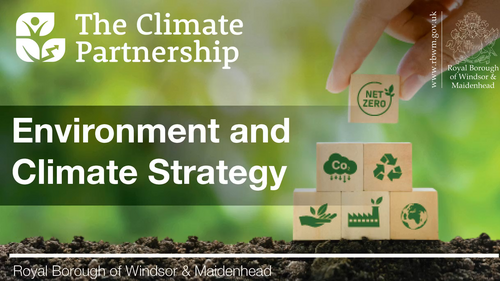
The Royal Borough of Windsor and Maidenhead has rolled out a 10-year strategy to tackle climate change and its impacts locally. Despite climate change sometimes feeling like a distant problem, every resident in the borough has been affected in different ways.
Storm Henk in January 2024 tore through the borough and resulted in around 250 flooded properties, road closures and more pressure on sewage systems. Furthermore, this summer has seen the reality of heatwaves like no other as the UK now experiences more days over 28 degrees, putting older residents and young people at risk, as well as people with existing health conditions, putting pressure on local health and transport services.
As a council we have already made positive progress since launching its Environment and Climate Strategy in 2020. The borough is becoming more circular with recycling rates increasing to 49%, as well as taking big steps to achieve cleaner, greener energy – as we secured over £9 million pounds in funding to improve energy efficiency in schools and council buildings. Furthermore, between 2018 and 2023, Royal Borough emissions dropped by 24.4%, putting us in the top 10% nationally for reducing carbon emissions. In the same period, we reduced council owned emissions by 33.4%, showing strong leadership in cutting our own footprint, but there is more work to do...
RBWM aims to help achieve net zero by working to align with the Tyndall Centre trajectory. The Tyndall Centre is a research group for climate change who’s goal it is to understand how climate change affects people. Their work has shown that we are required to hit an 88% reduction in borough–wide emissions in 2035 compared to 2018 levels, a significant challenge for a local authority with limited powers and resources.
We acknowledge the need to push on to close the gap and have highlighted six opportunities to accelerate our progress:
Central government policy and enforcement such as stronger national policies and long term green investment
Local action including EV infrastructure and nature based solutions
Significant investment through securing government funding or the private sector
Behaviour changes by shifting how people choose to travel or manage waste
Partnerships with businesses, charities and community groups
Integrated governance with climate considerations embedded across all council decisions and
Risk management, by proactively planning for climate shocks and financial resilience.
The Lib Dems have supported the 2050 net-zero target since 2019, and this strategy represents a long-term commitment to improving the community and wider area, as climate issues continue and conditions are under threat if action is not taken. This is a clear example of the Liberal Democrats efforts to protect local people alongside their pledges to reduce emissions while equally prioritising nature restoration.